 IDEAS THAT CHANGE THE WORLD
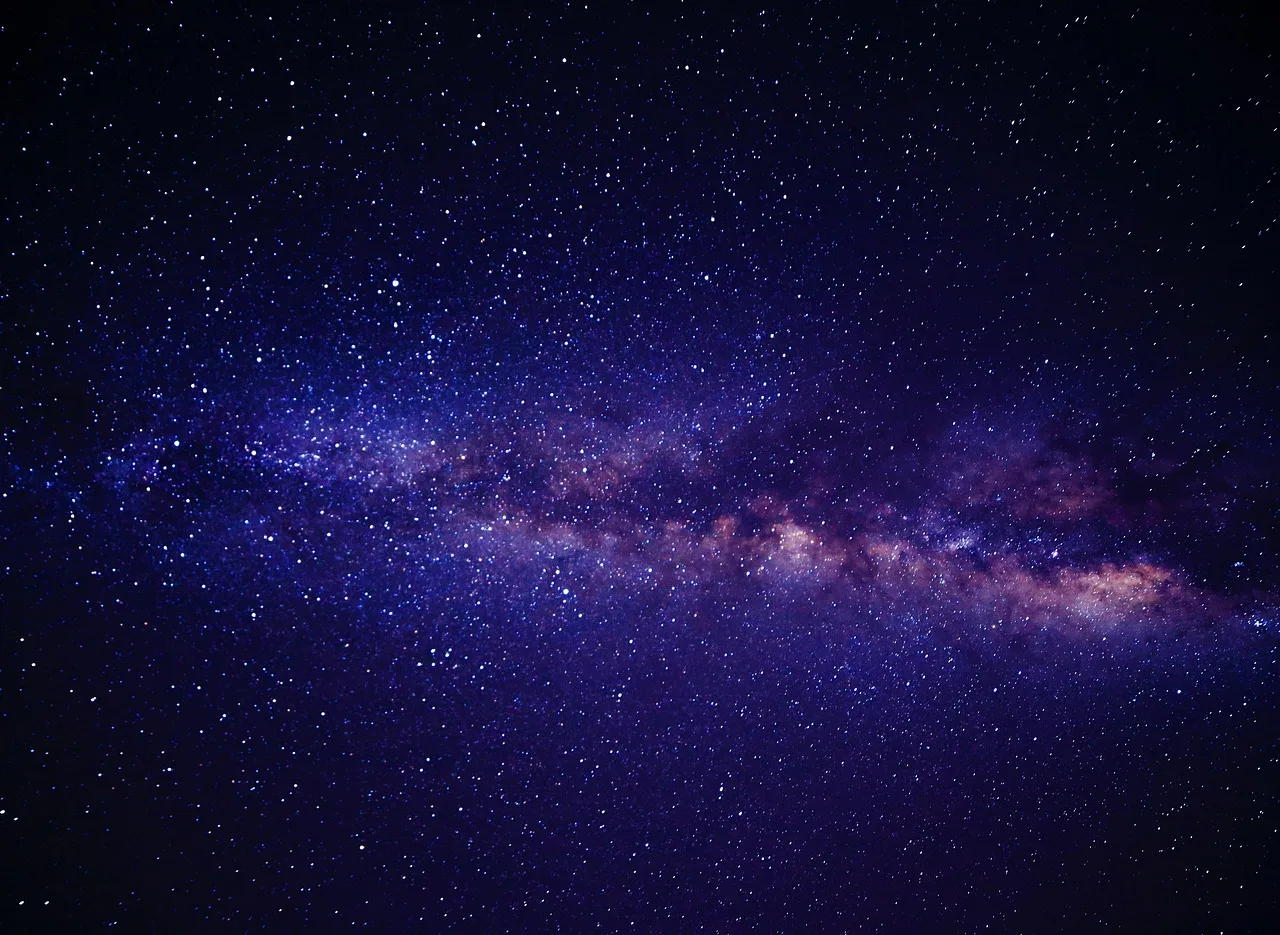
They could call it the record-breaking map of the Universe, and it has certainly broken every record. We are talking about the star map published by a team of astronomers from the Dark Energy Spectroscopic Instrument (DESI) Legacy Imaging Survey. A colossal achievement, unique both in scale and in the time spent developing it. It took no less than thirteen years of work to create a map of this size.
It is a valuable tool for both DESI astronomers and their colleagues worldwide. The material collected and processed is freely available online. Every celestial body can be explored and studied in detail, including those furthest from us. The aim? To learn ever more about the universe around us, revealing its mysteries and the many unknowns that remain, while also contemplating its boundless beauty.
The largest 2D map of the universe ever created
As we have seen, this is an extraordinary undertaking. A map of the universe with this resolution is not something you encounter every day, and the number of celestial objects captured by DESI’s telescopes is breathtaking.
More than five trillion pixels, brought together after thirteen years of observations and high-resolution photography. In total, no fewer than 263,407 exposures of the starry sky and what lies beyond our Galaxy. It is all thanks to the three telescopes: Victor M. Blanco (Chile), Nicholas U. Mayall (USA) and Bok (USA), which together made this achievement possible.

The high-resolution images reach the most remote boundaries of the galaxy accessible to the telescopes. But that is not all: you can also search for individual celestial bodies, zoom into different regions of the sky as much as you like, or click on the planets and stars displayed on screen. For those already known, a concise but detailed information sheet is available.
The data collected by DESI will be “fundamental to studying the history of the universe’s expansion”, according to Arjun Dey of the National Science Foundation. It will certainly make it possible to inspect and study galaxies much further away than ever before. It is a valuable tool that the astronomical community will be able to use consistently and accessibly.
Discovering the universe
Beyond the project’s scale, its added value lies in the fact that the research results are accessible to everyone. Anyone can go online at any time and access the material collected by DESI. Enthusiasts, curious visitors and professionals worldwide will have a map of the universe unlike anything seen before.
(If the subject interests you, you can access the Legacy Survey Sky Viewer; simply click this link.)

This is not the first time DESI has made its research results available to the international astronomical community. Scientists and researchers worldwide have previously taken their first steps thanks to the Legacy Imaging Viewer, the previous version of the same tool. This substantial update adds new, previously unexplored possibilities. It is truly fair to call it “stellar” work!
“The sky”, Arjun Dey, explains, “belongs to everyone”, and the surveys aim to give everyone “the chance to admire its wonders”. Considering the extraordinarily significant astronomical discoveries of recent times, from the exomoon to the mega Earth, the future of research promises many achievements still waiting to be explored. Faced with the immensity of the universe, the principle of Socrates — “I know that I know nothing” — takes on new relevance. Thanks to tools such as the Legacy Survey Sky Viewer, knowledge and research confront the unknown on a timeless journey: the extraordinary journey of discovery.