 IDEAS THAT CHANGE THE WORLD
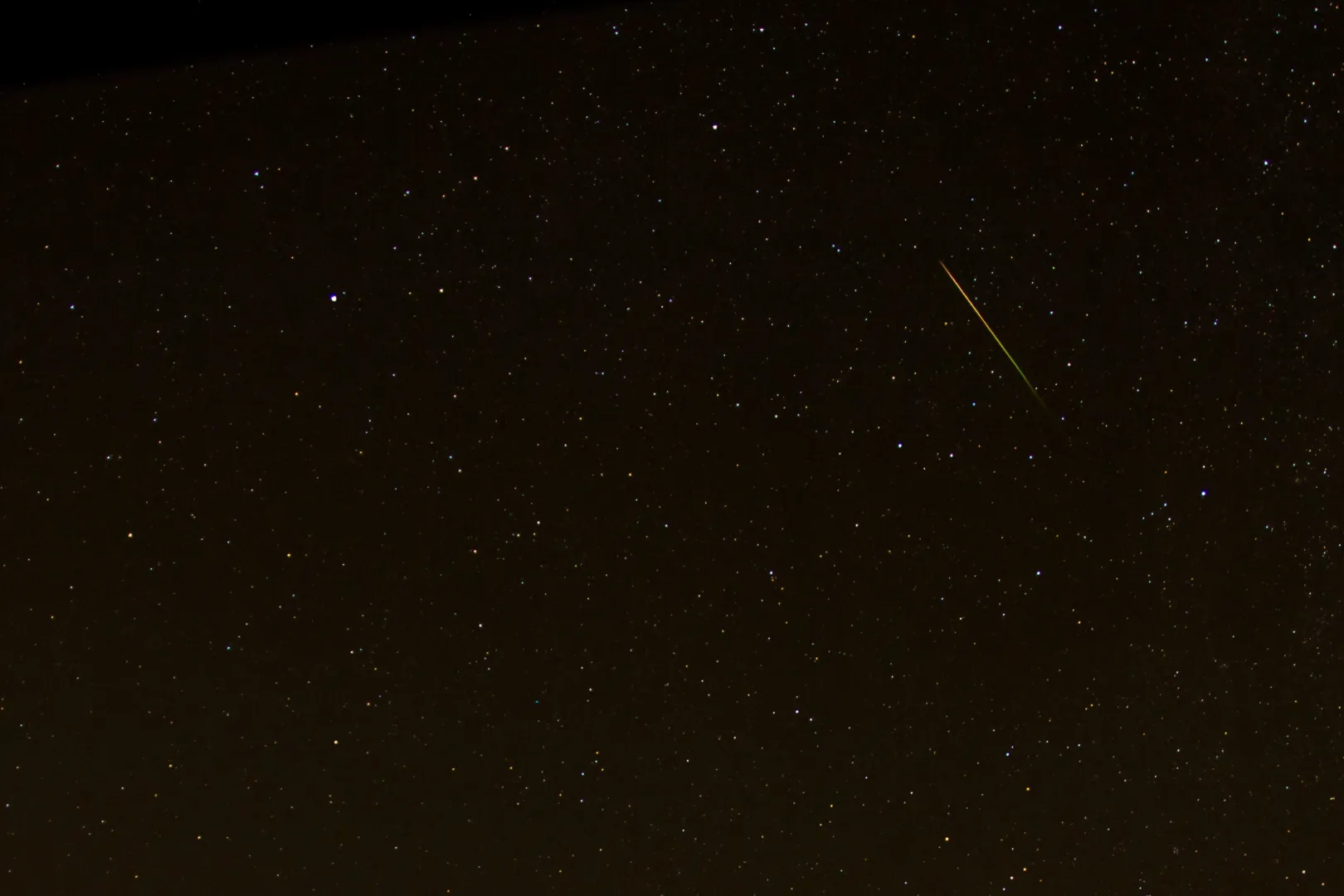
If you watched the sky on the night of 30–31 July, you will surely have seen them: the Delta Aquariids, a meteor shower originating, as the name suggests, from the constellation Aquarius. Weather permitting, they reliably offer a fascinating and evocative spectacle.
Few sights are as breathtaking as a summer night suddenly filled with streaks of light. The luminous appearance of meteors led these celestial bodies to become known over millennia as “shooting stars”. In reality, they are not stars at all. Their visible radiation, observable with the naked eye, results from overheating caused by friction. By contrast, stars shine because of internal nuclear reactions.
Every year, we look forward to meteor showers lighting up August skies on the night of Saint Lawrence. Yet the Delta Aquariids offer an equally impressive spectacle. Let’s learn more about these fascinating celestial bodies.
Delta Aquariids: July’s “shooting stars”
As we have seen, peak activity in the Delta Aquariid shower occurs in July, specifically on the night of 30–31 July. The best viewing time runs from midnight to the early hours of dawn.
Unfortunately, visibility in 2026 will not be ideal. The full Moon interferes with July’s shooting stars, with 98% illumination. Its light obscures smaller meteors, hiding them from human eyes. Larger ones, however, can be seen with the naked eye.

If you did not see even one shooting star, the good news is that you may still see one over the coming nights. The Delta Aquariid shower remains active for an extended period. Observers should face away from the Moon or choose a viewing spot not directly exposed to its light.
With an ideal average of 25 meteors per hour, there is a reasonable chance of spotting at least one or two bright shooting stars overhead.
Interestingly, even Google, the famous search engine, has chosen to celebrate the shooting stars’ activity on these nights. If you do not believe it, try typing “sciame meteore” (meteor shower) and see what appears on your computer screen…
Where shooting stars come from
Where do the meteors making up showers such as the Delta Aquariids come from?
Exploring a meteor shower’s origins is undoubtedly fascinating. For the shooting stars of July, their apparent origin, as noted, is the constellation Aquarius. The meteors seen on these nights are most likely fragments of dust and debris left by the passage of a comet.

The leading hypothesis points to comet 96P/Machholz, which orbits the Sun roughly every five years. This comet, possibly interstellar in origin, contains far less carbon and cyanogen than similar comets in our Solar System. Its origins remain unclear, however, offering exciting opportunities for study.
Another source of shooting stars is asteroids, which break apart after collisions with other celestial bodies, releasing rock fragments and dusty debris. These can in turn aggregate into new meteoroids that converge in a meteor shower.