 IDEAS THAT CHANGE THE WORLD
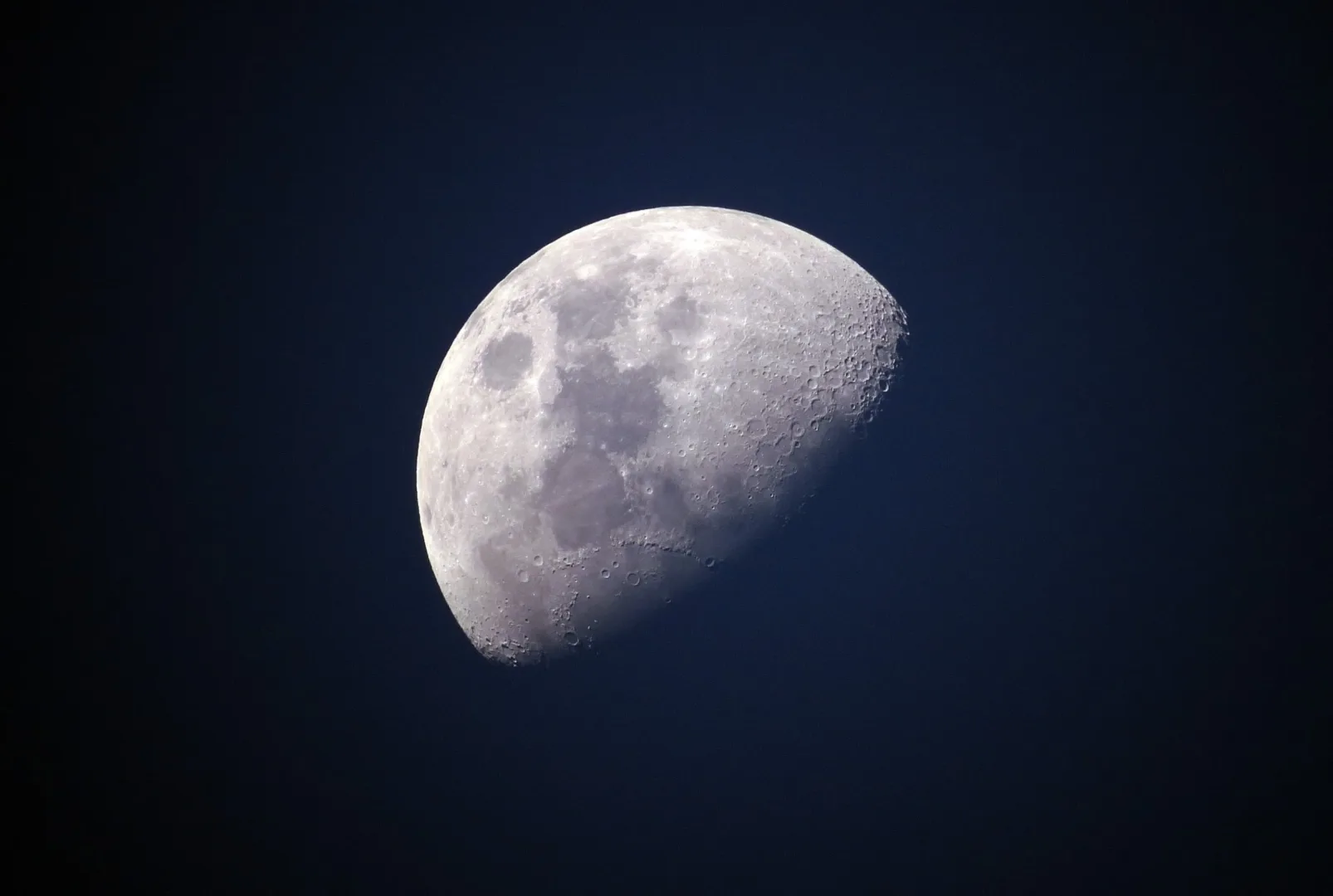
You have probably seen the images from a few days ago showing a Falcon 9, a Space X rocket, crashing onto the Moon’s surface. But what really happened? Let’s find out together.
The Space X rocket crashes onto the Moon: what happened?
The rocket had been on a collision course for some time, but the story may only have begun circulating and gone viral in the days before impact.

It was a stage of a Falcon 9 rocket from Space X, Elon Musk’s space agency, measuring 12 metres long and weighing about four tonnes.
The crash occurred on Wednesday, 5 August 2026, at a speed of about 8,700 km/h. The news undoubtedly caused a stir, but it was not a catastrophic mistake, sabotage or a secret mission. The truth is that it was a controlled accident.
Although the rocket initially went off course unintentionally, scientists subsequently tracked its new path for a long time. The impact could prove a gold mine for scientific research, enabling studies of lunar geology and analyses of collision models.
Elon Musk’s Falcon 9
But let’s take a step back: how did a stage of a Space X Falcon 9 rocket end up there?
The rocket launched from Florida in January 2025. Its mission was to carry two lunar landers into space: Firefly Aerospace’s Blue Ghost 1 and Japan’s Resilience from Ispace.
The mission was completed successfully, but the rocket’s upper stage was then supposed to re-enter Earth’s atmosphere and burn up.
Commands for course-correction manoeuvres were not sent, leaving the rocket stranded in orbit for a full 18 months.
The stage is an empty cylinder made of an aluminium-lithium alloy, 12 metres long, four metres wide and weighing about four tonnes.
Over those 18 months, its trajectory changed due to the gravitational pull of Earth, the Sun and the Moon, as well as solar radiation pressure.
The moment of impact
These slow changes in the rocket stage’s trajectory led to an inevitable crash into our natural satellite.

The crash occurred on the morning of Wednesday, 5 August 2026, at 8:35 a.m. Italian time. The impact took place near Einstein Crater, at about 8,700 km/h.
The impact is estimated to have excavated a crater about 3.6 metres deep and 18 metres wide. Measurements detected an enormous debris plume tens of kilometres high. However, the moment of impact could not be observed because it was obscured by sunlight.
Why the Space X rocket’s collision with the Moon matters
The controlled accident nevertheless proved highly significant for astronomers’ studies. It effectively became a scientific experiment.
Scientists study the craters left on the lunar surface by meteorite impacts every day. In those cases, however, we know nothing about the objects involved. Here, by contrast, we know everything about the Falcon 9: its mass, dimensions, material and speed. Better than any impact model we could ever recreate on a computer.
The impact is also important for studying lunar geology. These studies will be fundamental to targeted monitoring of space debris and, above all, to designing future lunar bases.