 IDEAS THAT CHANGE THE WORLD
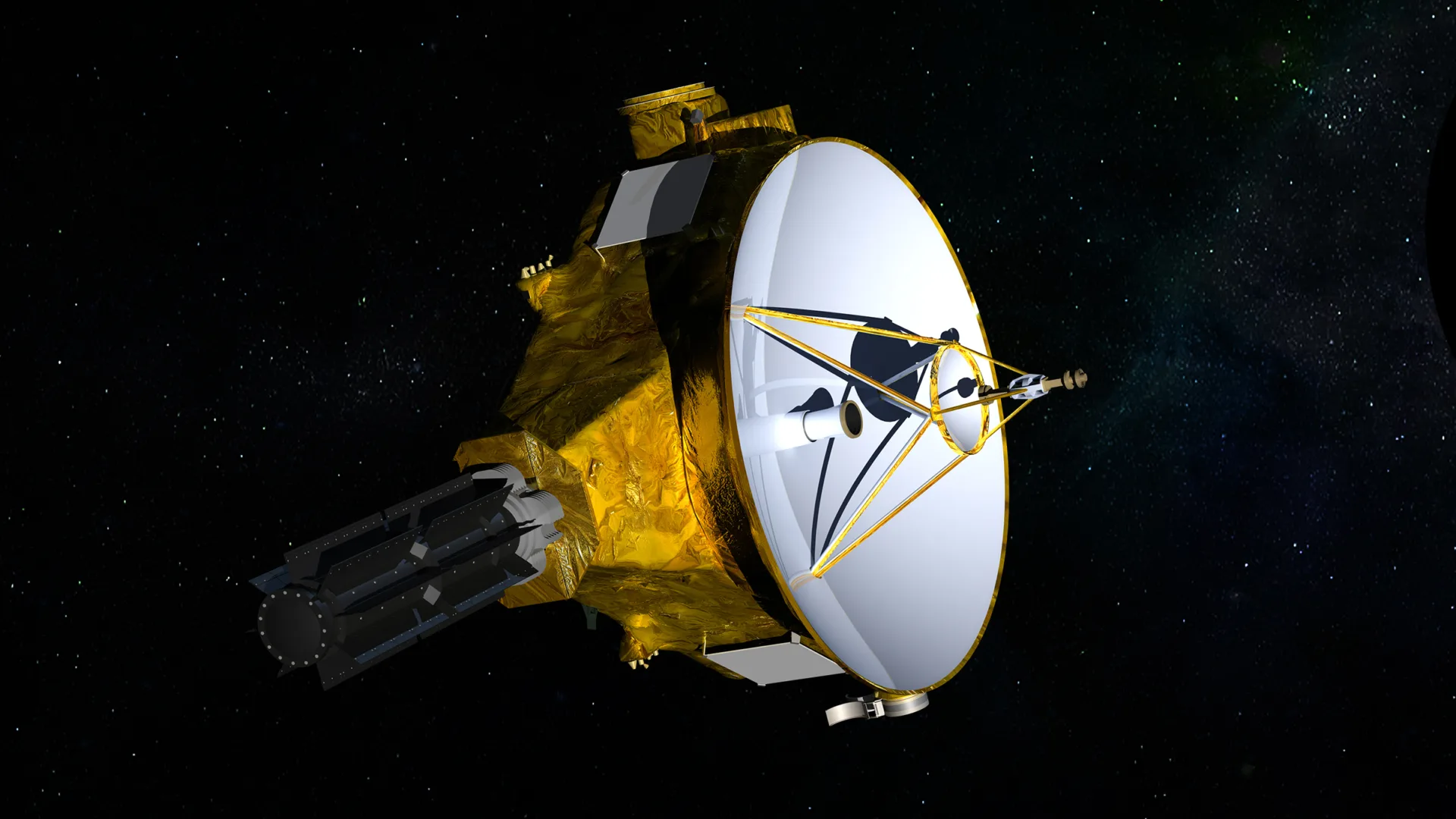
The New Horizons probe “slept” for 321 days before waking on 23 June 2026. It is 9.5 billion kilometres from Earth and, after this hibernation, is ready to transmit data collected in the Kuiper Belt, opening a new chapter in the study of the universe.
New Horizons: a twenty-year journey
New Horizons is a historic NASA probe that left Earth for space a full 20 years ago.

The probe launched from Cape Canaveral on 19 January 2006 with the main objective of studying Pluto up close. In July 2015, after nine years travelling through space, it achieved that objective with a close flyby of Pluto and its moon Charon.
Completing its primary goal did not end the probe’s life. Quite the opposite: New Horizons continued its long journey towards the outer reaches of our Solar System with a new goal—exploring the Kuiper Belt.
In January 2019, it closely explored a particularly interesting Kuiper Belt object, Arrokoth (2014 MU69).
The images of Pluto
In 2015, New Horizons sent Earth the sharpest, most detailed images ever taken of Pluto, leaving the entire world astonished.
Those images revealed the planet’s various geological features. They were captured by Ralph, an instrument aboard the probe equipped with a Multispectral Visual Imaging Camera.
One image in particular was processed using blue, red and infrared filters and highlights long fissures intersecting craters.
Other images show the boundary between the planet’s sunlit and shadowed sides. Researchers mapped the distribution of ice and methane across the surface, identifying areas rich in them and those where they are scarce.
Hibernation
After its remarkable work during flybys of Pluto, Charon and the Kuiper Belt object, New Horizons continued its journey.

In recent years it has conducted remarkable studies of the Sun’s outer heliosphere and dozens of other objects in the Kuiper Belt.
On 7 August 2025, the probe finally entered hibernation, beginning a long rest lasting 321 days.
On 23 June 2026, it awoke from its long sleep. New Horizons is 9.5 billion kilometres from Earth, and because of this enormous distance, confirmation of its successful awakening took eight hours and 52 minutes to reach flight controllers at the Johns Hopkins Applied Physics Laboratory.
Despite hibernating, it continued sending a weekly signal to Earth confirming that it was functioning correctly.
The future of New Horizons
The probe has now resumed normal activity, pursuing its current objectives: studying hydrogen in the outer heliosphere and collecting data on dust and plasma in the Kuiper Belt.
New Horizons is expected to leave the Kuiper Belt by 2029, while its radioisotope generator should supply sufficient power into the 2030s.