 IDEAS THAT CHANGE THE WORLD
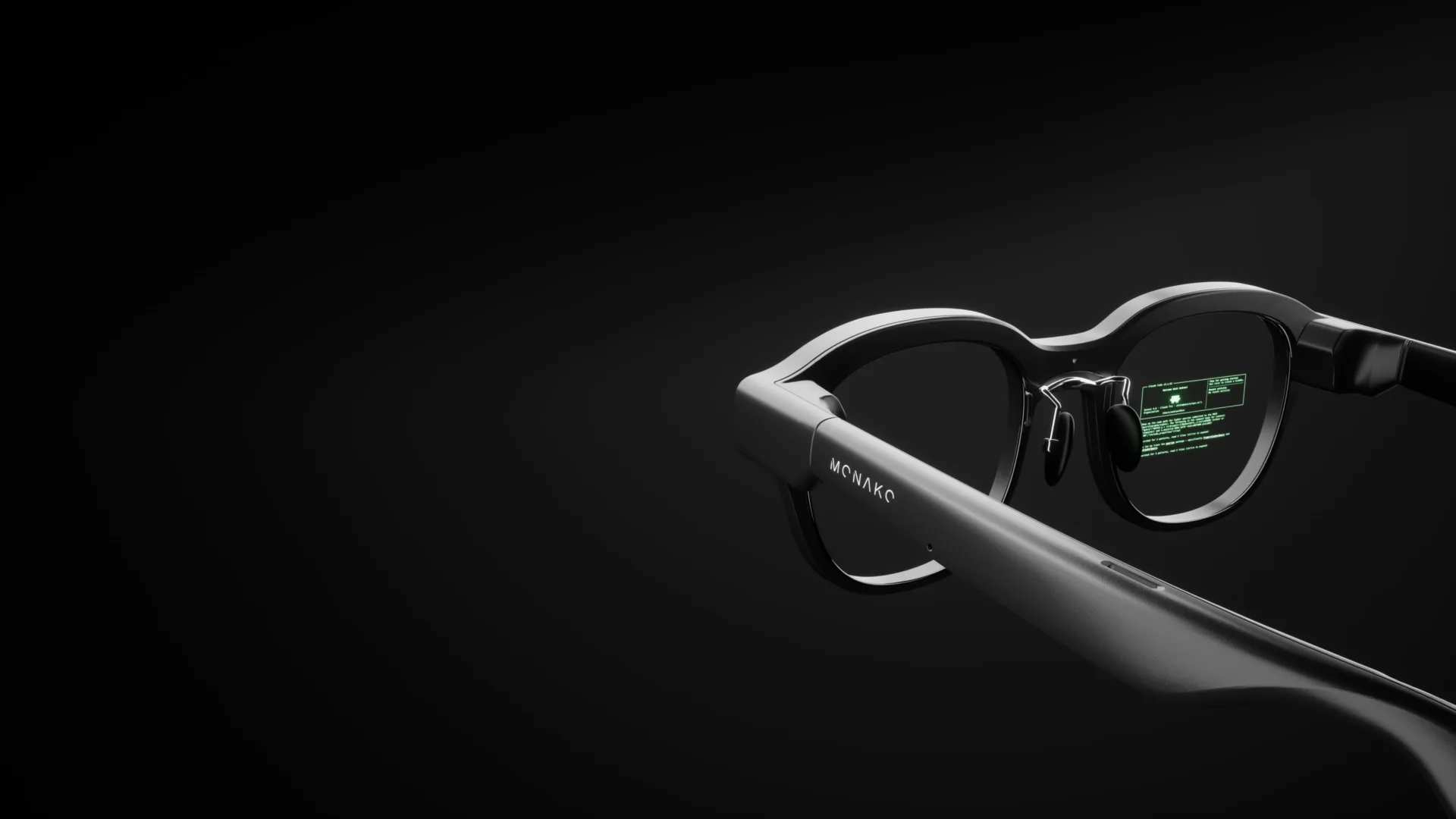
At first glance, they may not look very different from the other smart glasses on the market, but they are. Monako Glass is a fully fledged wearable portable computer with integrated artificial intelligence. Let us explore it together.
“Not a toy. A tool. Monako Glass is not made to capture your lunch: it is made to build your next project. At 48 grams, it is the lightest smart glasses in the world.”
The best smart glasses at the lowest weight
The Chinese startup Monako sparked curiosity among experts and enthusiasts around the world with the launch of its brand-new smart glasses on June 3, 2026.

Monako Glass represents a truly innovative revolution for the wearables sector. It introduces a new and ambitious concept: turning an ordinary pair of smart glasses into a fully fledged wearable portable computer.
What is even more surprising, however, is the simplicity and lightness in which this ambitious project is contained. The glasses have a minimalist design and weigh just 48 grams. This makes them comfortable to wear, even for extended periods of use.
The bone-conduction microphone
Inside is a genuinely interesting and functional system: a waveguide display, a camera, speakers and a bone-conduction microphone.
The latter is one of the most incredible and interesting innovations. The microphone sits right on the nose and uses vibrations from the nasal bone to isolate the user’s voice. This makes communication extremely clear even in excessively noisy environments.
Monako Glass redefines human–AI interaction
At the heart of this wearable device is its integration with artificial intelligence, which reaches truly advanced levels here.
The device is designed for professionals at work and therefore allows coding agents to run directly on the glasses, without a mouse, keyboard or screen.
MonoOS: the operating system
Inside, we find MonoOS, a lightweight, modular and extremely efficient operating system based on Linux.

Monako Glass also integrates a Lua application layer to reduce memory consumption and ensure high performance.
The result is a kind of always-available virtual desktop, with applications that can be anchored to the glasses and become persistent elements in the user’s field of view.
User interface and interaction
The interface was designed to be as natural and simple as possible. Interaction can take place in three main ways: voice commands, gesture controls and real-time feedback.
All of this is supported by optimal integration with artificial intelligence, taking Monako Glass to a decidedly higher level of automation than other smart glasses.
Monako Glass: release and availability
There is currently little information about the market launch date of Monako Glass, although shipments are expected to begin this coming August.
The strategy adopted by the Chinese startup is a base reservation price of $19. This makes it possible not only to test public interest in the product but also to start building a real community.
The final official launch price will be $399.